 Wales · 1st century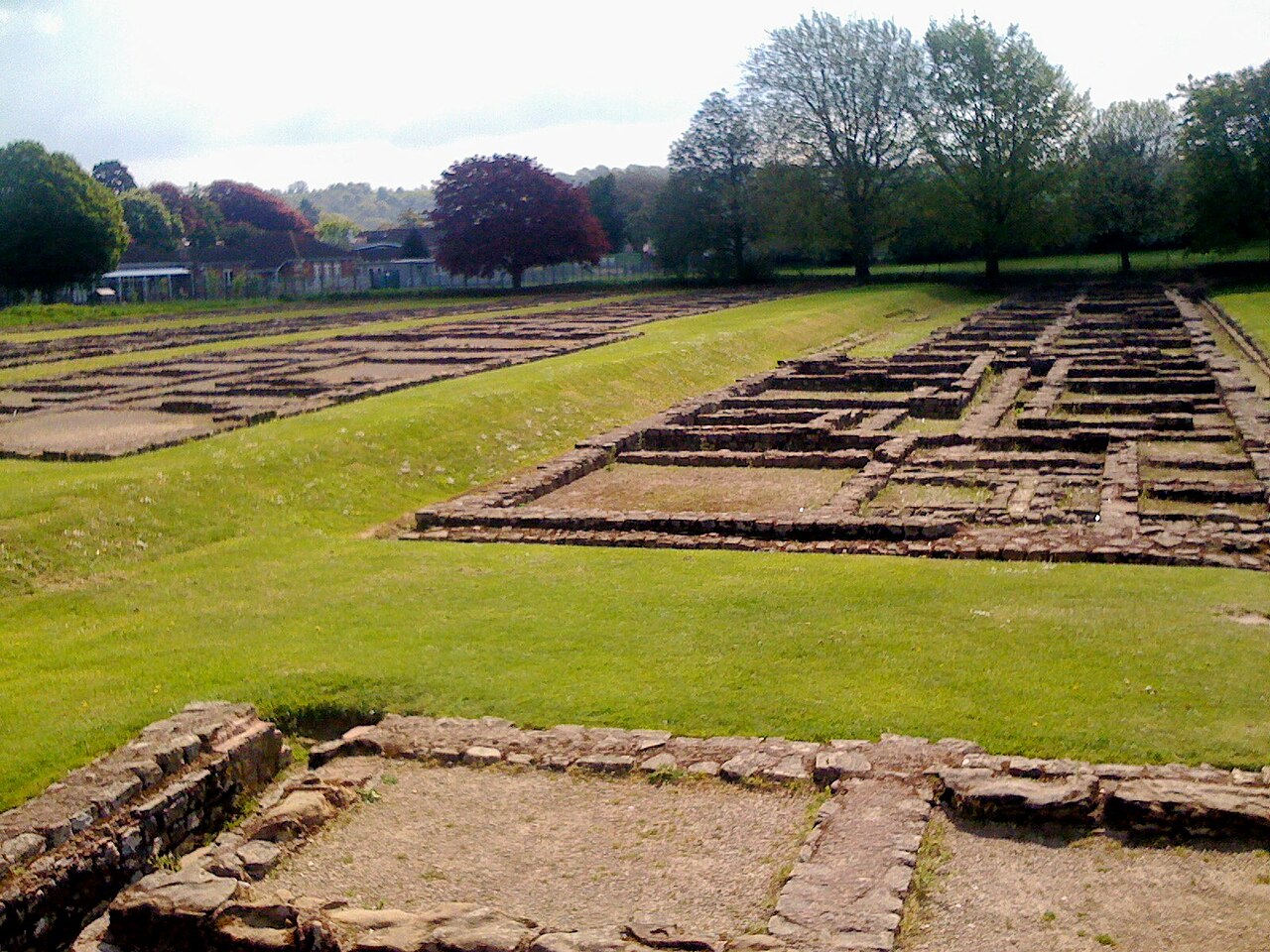
Isca, variously specified as Isca Augusta or Isca Silurum, was the site of a Roman legionary fortress and settlement or vicus, the remains of which lie beneath parts of the present-day suburban town of Caerleon in the north of the city of Newport in South Wales. The site includes Caerleon Amphitheatre and is protected by Cadw.
Headquarters of the Legion "II Augusta", which took part in the invasion under Emperor Claudius in 43, Isca is uniquely important for the study of the conquest, pacification and colonisation of Britannia by the Roman army. It was one of only three permanent legionary fortresses in later Roman Britain and, unlike the other sites at Chester and York, its archaeological remains lie relatively undisturbed beneath fields and the town of Caerleon and provide a unique opportunity to study the Roman legions in Britain. Excavations continue to unearth new discoveries; in the late 20th century a complex of very large monumental buildings outside the fortress between the River Usk and the amphitheatre was uncovered. This new area of the canabae was previously unknown.
Text adapted from “Isca Augusta” on Wikipedia, CC BY-SA 4.0.
Isca Augusta ranks #1,483 of 9,079 worldwide in the atlas's castle fame ranking, and #16 of the 107 mapped in Wales. Founded c. 75, it is older than 98% of the atlas's dated landmarks — one of 33 atlas entries founded in the 1st century. Its Wikipedia articles were opened 2,867 times in the last 60 days, more than 77% of the atlas. 14 more atlas landmarks stand within 25 km. The nearest day-trip guide is Cardiff, 21 km away. See how Wales compares in the castle statistics.
View on the interactive castle map →