 England · 2nd century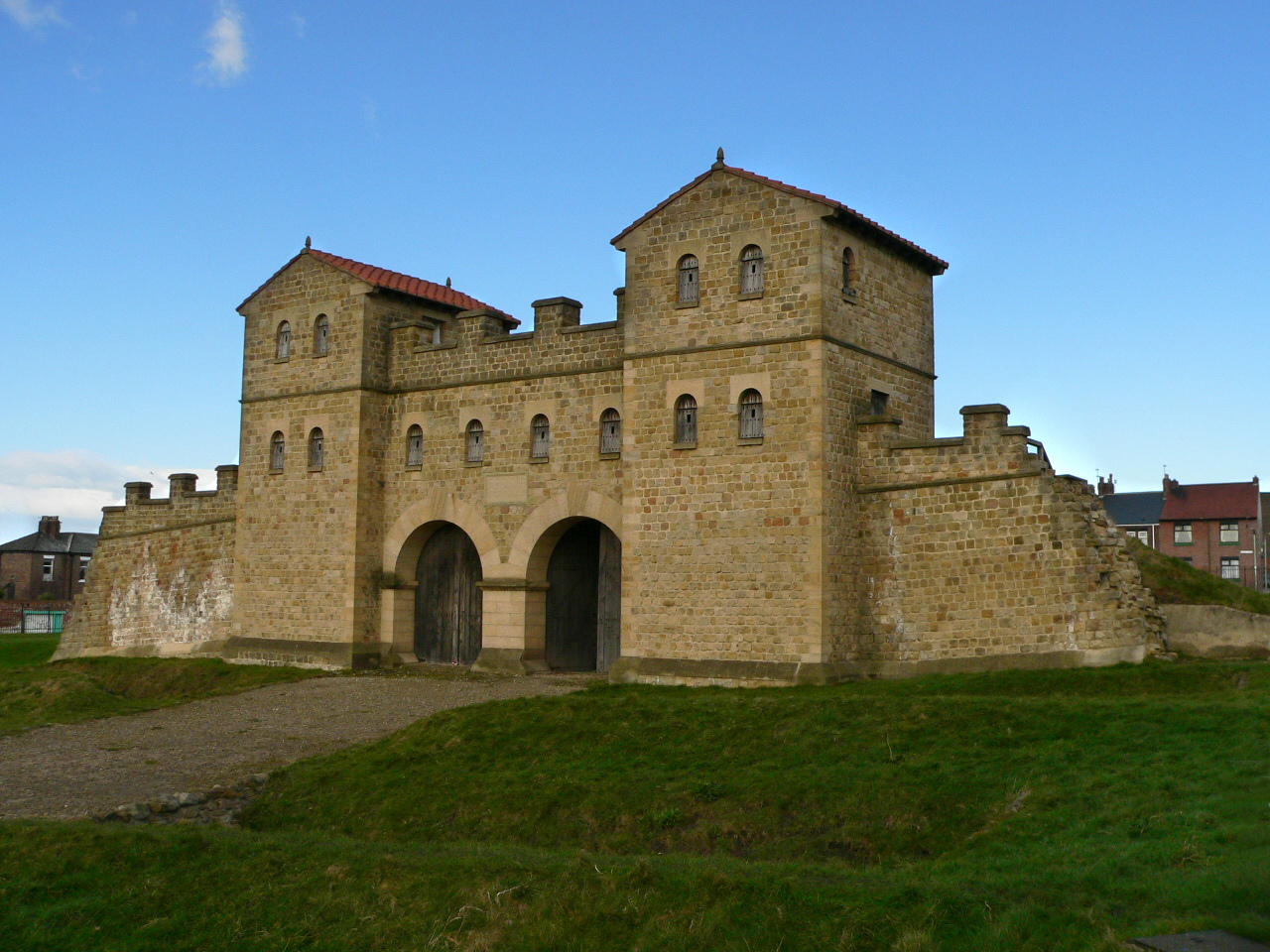
Arbeia was a large Roman fort in South Shields, Tyne & Wear, England, now ruined and partially reconstructed. It was first excavated in the 1870s. All modern buildings on the site were cleared in the 1970s. It is managed by North East Museums as Arbeia, South Shields Roman Fort.
The name Arbeia comes from the Notitia Dignitatum, the only ancient source to feature the name. The entry in Notitia Dignitatum for Arbeia was originally associated with the town of Ireby, Cumbria as early as 1587, but this has since been dismissed as a superficial resemblance. In the early 1900s the name began to be associated with the South Shields site alongside Ireby as well as Moresby, Cumbria.
The name entered widespread use as the probable name for the South Shields fort in 1953, supported by research from Ian Richmond.
Arbeia may mean the "fort of the Arab troops", referring to the fact that part of its garrison at one time was a squadron of Mesopotamian boatmen from the Tigris, following Emperor Septimius Severus securing the city of Singara in 197. However, this is purely speculative and hinges on the similarity of the words 'Arab' and 'Arbeia'.
Alternatively, it could mean "(fort by a) stream noted for wild turnips".
The fort was built in 129 AD as a small cohort fort, a few years later than most of the Hadrian's Wall forts, on the Lawe Top overlooking the mouth of the River Tyne and four miles beyond the eastern end of Hadrian’s wall, from where it guarded the flank and main sea supply route to the Wall and the small port on the south of the Tyne.
Its garrison was reduced during the occupation of Scotland in the reign of Antoninus Pius. Early in Marcus Aurelius' reign (161 to 180) it was reoccupied and from 198 it was considerably altered in plan and usage. A dividing wall between the northern and southern halves of the fort allowed the north part to store supplies from sea-going ships, whilst the southern part remained a garrison. The modifications are associated with Septimius Severus' Roman invasion of Caledonia (208–211), a series of campaigns against the troublesome Caledonian tribes, in which the fort may have served as his headquarters.
Text adapted from “Arbeia” on Wikipedia, CC BY-SA 4.0.
Arbeia ranks #1,911 of 9,079 worldwide in the atlas's castle fame ranking, and #123 of the 360 mapped in England. Founded 129, it is older than 98% of the atlas's dated landmarks — one of 21 atlas entries founded in the 2nd century. Its Wikipedia articles were opened 1,764 times in the last 60 days, more than 66% of the atlas. 9 more atlas landmarks stand within 25 km. The nearest day-trip guide is Sunderland, 12 km away. It is stop 1 of 18 on the Northumberland castle coast, Newcastle upon Tyne to Berwick-upon-Tweed. See how England compares in the castle statistics.
View on the interactive castle map →