 China · 18th century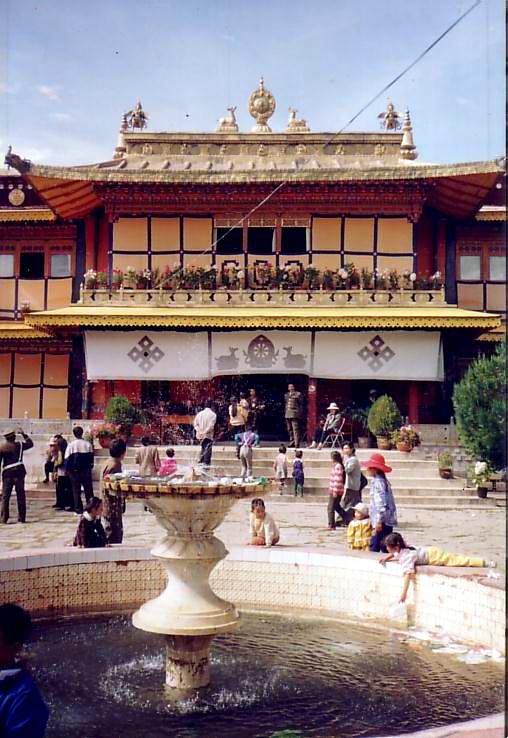
Norbulingka (Standard Tibetan: ནོར་བུ་གླིང་ག; Wylie: Nor bu gling ga; simplified Chinese: 罗布林卡; traditional Chinese: 羅布林卡; literally "Jeweled Park") is a palace and surrounding park in Lhasa, Tibet built from 1755. It served as the traditional summer residence of the successive Dalai Lamas from the 1780s up until the 14th Dalai Lama's exile in 1959. Part of the "Historic Ensemble of the Potala Palace", Norbulingka is recognized as a UNESCO World Heritage Site, and was added as an extension of this Historic Ensemble in 2001. It was built by the 7th Dalai Lama and served both as administrative centre and religious centre. It is a unique representation of Tibetan palace architecture.
Norbulingka Palace is situated in the west side of Lhasa, a short distance to the southwest of Potala Palace. Norbulingka covers an area of around 36 hectares (89 acres) and considered to be the largest man-made garden in Tibet.
Norbulingka park is considered the premier park of all such horticultural parks in similar ethnic settings in Tibet. During the summer and autumn months, the parks in Tibet, including the Norbulingka, become hubs of entertainment with dancing, singing, music and festivities. The park is where the annual Sho Dun or "Yoghurt Festival" is held.
The Norbulingka palace has been mostly identified with the 13th and the 14th Dalai Lamas who commissioned most of the structures that still stand today. During the invasion of Tibet in 1950, a number of buildings were damaged, but were rebuilt beginning in 2003, when the Chinese government initiated renovation works here to restore some of the damaged structures, and also the greenery, the flower gardens and the lakes.
Text adapted from “Norbulingka” on Wikipedia, CC BY-SA 4.0.
Norbulingka ranks #311 of 9,079 worldwide in the atlas's castle fame ranking, and #8 of the 107 mapped in China. Founded 1755, it is older than 16% of the atlas's dated landmarks — one of 696 atlas entries founded in the 18th century. Its Wikipedia articles were opened 10,529 times in the last 60 days, more than 94% of the atlas. 1 more atlas landmarks stand within 25 km. See how China compares in the castle statistics.
View on the interactive castle map →