Palace & château
Shōren-in Temple
🇯🇵 Japan · 12th century
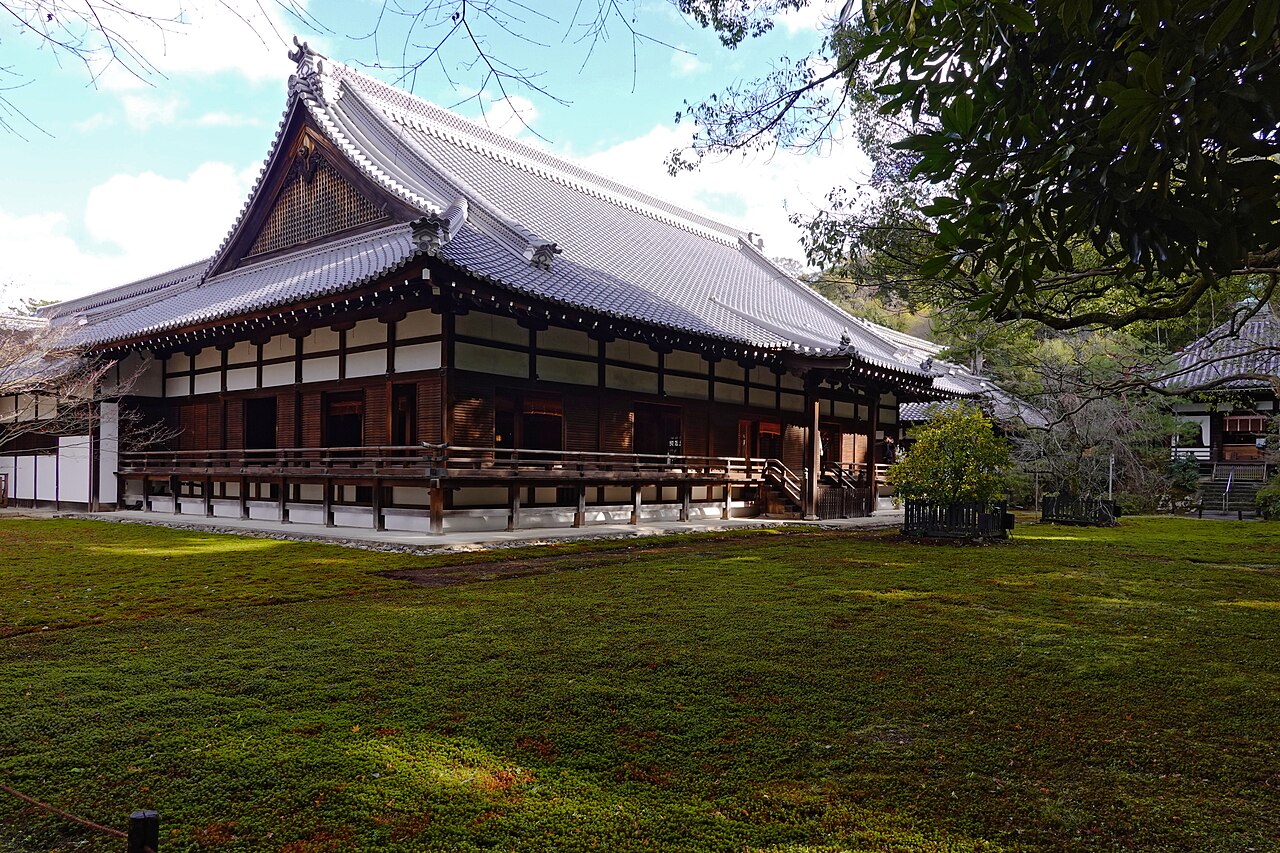
Shōren-in (青蓮院) is a Buddhist temple located in the Awadaguchi Sanjōbōchō neighborhood of Higashiyama-ku, Kyoto, Japan. It belongs to the Tendai sect of Japanese Buddhism. It is also known as the Shōren-in Monzeki (青蓮院門跡). Its precincts were designated a National Historic Site in 1942.
Shōren-in originated from a small chapel called Shōren-bō built by Saichō in the eastern precinct of Mount Hiei. The site is currently the third parking lot of Enryaku-ji. Shōren-bō was the residence of numerous famous monks including En'nin. It was moved to a location in Sanjō Shirakawa, slightly northwest of the current location at the end of the Heian period. In 1150, Emperor Toba and Empress Bifukumon'in made Shōren-bō an official place of prayer for the imperial family. As a result, the temple's status began to rise. Furthermore, Emperor Toba had his seventh son, Prince Kakukai, making it became a monzeki temple, and afterwards numerous sons of the imperial family and regent families served as chief priests.
Prince Kakutai became the second head priest, but as for the succession, Kujo Kanezane pressured Kakukai to give it to his younger brother, Jien. During the Kamakura period, the temple was relocated to its current location on high ground to avoid flooding of the Shirakawa River. This was the site of the former temple called Juraku-in. The tomb of Emperor Hanazono, located southeast of the temple, is called "Jurakuin no Ueno Misasagi", which is a remnant of this name.
By the 1220s, the name "Shōren-in Monzeki" first appeared in an Imperial decree of Emperor Go-Saga issued on December 29, 1248. Meanwhile, a dispute over Jien's successor triggered the formation of two factions within Shōren-in, and the internal conflict over the position of monzeki continued for over 100 years until Emperor Go-Daigo mediated and the 16th head priest, Prince Jidō, handed over the position to the 17th head priest, Prince Sōnen. Of the successive chief priests, the third head priest, Jichin, is famous for being the author of the historical book Gukanshō. Jien was the son of the regent Fujiwara no Tadamichi, and was also known as a poet, and served as the head priest of the Tendai sect four times. The 17th head priest, Prince Sōnen, was the sixth son of Emperor Fushimi and was known as a master calligrapher.
Text adapted from “Shōren-in” on Wikipedia, CC BY-SA 4.0.
Shōren-in Temple ranks #2,007 of 8,133 worldwide in the atlas's castle fame ranking, and #121 of the 297 mapped in Japan. Founded 1150, it is older than 81% of the atlas's dated landmarks — one of 563 atlas entries founded in the 12th century. Its Wikipedia articles were opened 4,828 times in the last 60 days, more than 84% of the atlas. 15 more atlas landmarks stand within 25 km. The nearest day-trip guide is Kyoto, 1 km away. It is one of the 71 landmarks on the atlas's regional map of Kansai. See how Japan compares in the castle statistics.
View on the interactive castle map →Frequently asked questions
Where is Shōren-in Temple?
Shōren-in Temple stands in Japan, at 35.00731°, 135.7832°.
When was Shōren-in Temple built?
The atlas dates its founding to 1150. Earlier structures may have stood on the site; this is the earliest documented founding year.
How famous is Shōren-in Temple?
In this atlas's fame ranking: #2,007 of 8,133 worldwide, and #121 in Japan. Fame here combines how many Wikipedia language editions cover a landmark with how many people read them.
What is the nearest castle to Shōren-in Temple?
Kyoto Imperial Palace, about 3 km away.
More castles in Japan
- Kyu Shiba Rikyu Garden Japan · 17th century
- Akutagawayama Castle Japan · 16th century
- Takatori Castle Japan · 14th century
- Kurume Castle Japan · 16th century
More palaces & châteaux
- Milotice Castle Czech Republic · 18th century
- Greys Court England · 14th century
- Ripley Castle England · 16th century
- Kamieniec Ząbkowicki Palace Poland · 19th century