 England · 11th century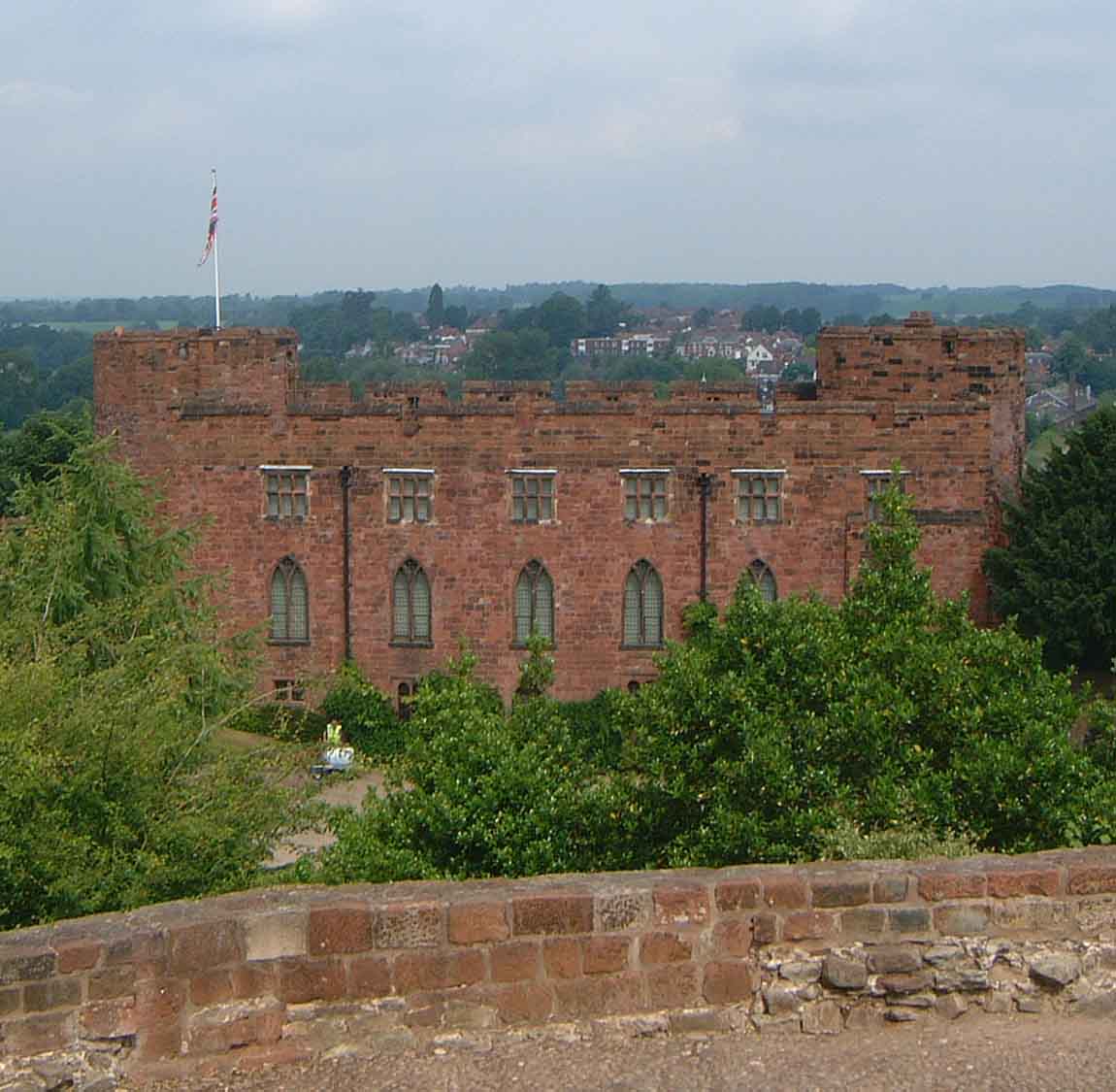
Shrewsbury Castle is a red sandstone castle in Shrewsbury, Shropshire, England. It stands on a hill in the neck of the meander of the River Severn on which the town originally developed. The castle, directly above Shrewsbury railway station, is a Grade I listed building.
A castle was ordered on the site by William I c. 1067 but it was greatly extended under Roger de Montgomery circa 1070 as a base for operations into Wales, an administrative centre and as a defensive fortification for the town, which was otherwise protected by the loop of the river. Town walls, of which little now remains, were later added to the defences, as a response to Welsh raids and radiated out from the castle and surrounded the town; the area known as Town Walls still has a small section of them and a single tower, known as Town Walls Tower, which is in the care of the National Trust. At the start of the civil war between King Stephen and the Empress Matilda, the castle was held by William Fitz Alan, lord of Oswestry and Clun, on behalf of Matilda. After a short siege in 1138, King Stephen took the castle and had the surviving garrison hanged from the battlements.
The castle was briefly held by Llywelyn the Great, Prince of Wales, in 1215. Parts of the original medieval structure remain largely incorporating the inner bailey of the castle; the outer bailey, which extended into the town, has long ago vanished under the encroachment of later shops and other buildings. Having fallen into decay after c. 1300 (at the end of the Welsh wars) the castle became a domestic residence during the reign of Elizabeth I and passed to the ownership of the town council c.1600. The castle was extensively repaired in 1643 during the Civil War and was briefly besieged by Parliamentary forces from Wem before its surrender. It was acquired by Sir Francis Newport in 1663. Further repairs were carried out by Thomas Telford on behalf of Sir William Pulteney, MP for Shrewsbury, after 1780 to the designs of the architect Robert Adam.
The Shropshire Horticultural Society purchased the castle from a private owner, then Lord Barnard, and gave it to the town in 1924 and it became the location of Shrewsbury's Borough Council chambers for over 50 years. The castle was internally restructured to become the home of the Shropshire Regimental Museum when it moved from Copthorne Barracks and other local sites in 1985.
Text adapted from “Shrewsbury Castle” on Wikipedia, CC BY-SA 4.0.
Shrewsbury Castle ranks #1,996 of 9,079 worldwide in the atlas's castle fame ranking, and #135 of the 360 mapped in England. Founded 1070, it is older than 88% of the atlas's dated landmarks — one of 436 atlas entries founded in the 11th century. Its Wikipedia articles were opened 2,477 times in the last 60 days, more than 74% of the atlas. 3 more atlas landmarks stand within 25 km. The nearest day-trip guide is Wrexham, 41 km away. See how England compares in the castle statistics.
View on the interactive castle map →