 Israel · 12th century
Caco ranks #7,606 of 9,040 worldwide in the atlas's castle fame ranking, and #21 of the 23 mapped in Israel. Founded 1123, it is older than 84% of the atlas's dated landmarks, one of 763 atlas entries founded in the 12th century. 1 more atlas landmarks stand within 25 km. The nearest day-trip guide is Tulkarm, 5 km away. It is one of the 105 landmarks on the atlas's regional map of the Levant. See how Israel compares in the castle statistics.
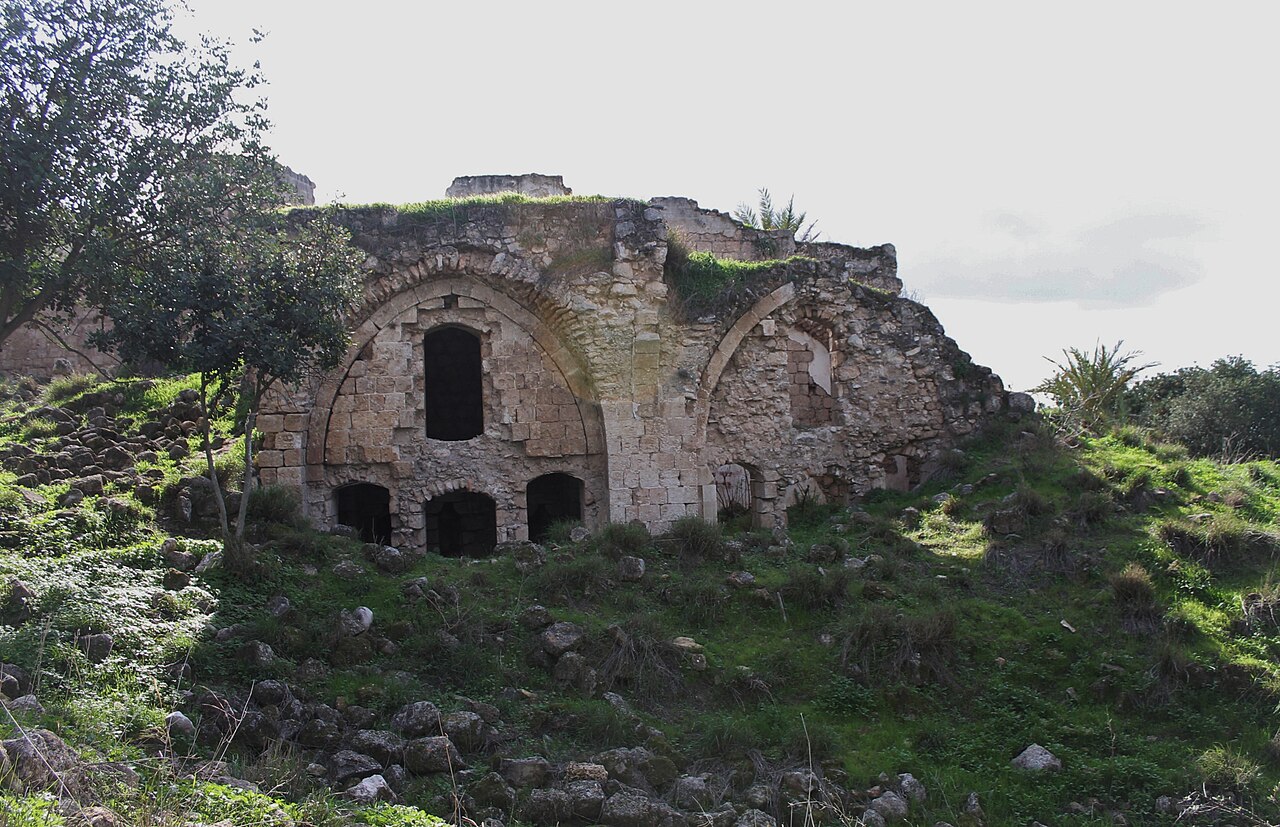
Caco (Qaqun) (English: Qaqun, Hebrew: קאקון) is a 12th-century Crusader castle situated in present-day Israel, 15 km from Netanya and 3 km from the "Utopia" park and Kibbutz Bahan.
The first mention of the castle dates from 1123; it was founded as a defensive fortification on the road from Caesarea to Nablus.
After the fall of Arsuf and Caesarea, Qaqun became the capital of the coast. The fortress, guarded by Templar knights, existed until 1260 and was then captured by Sultan Baibars. Prince Edward, the future king of England, tried to retake the castle in 1271 but did not succeed.
Later the fortress became one of the principal postal stations of the Mamluks.
Subsequently one of the battles of Napoleon's army against the Turks took place here, in which Napoleon was victorious. From here Napoleon's army moved on to the Siege of Acre.
At present the castle is in a half-ruined condition and has been conserved. It is of interest as an object of cultural and historical significance.
Machine-translated from “Какун (крепость)” on the Russian Wikipedia, CC BY-SA 4.0.
View on the interactive castle map →