 Belgium · 10th century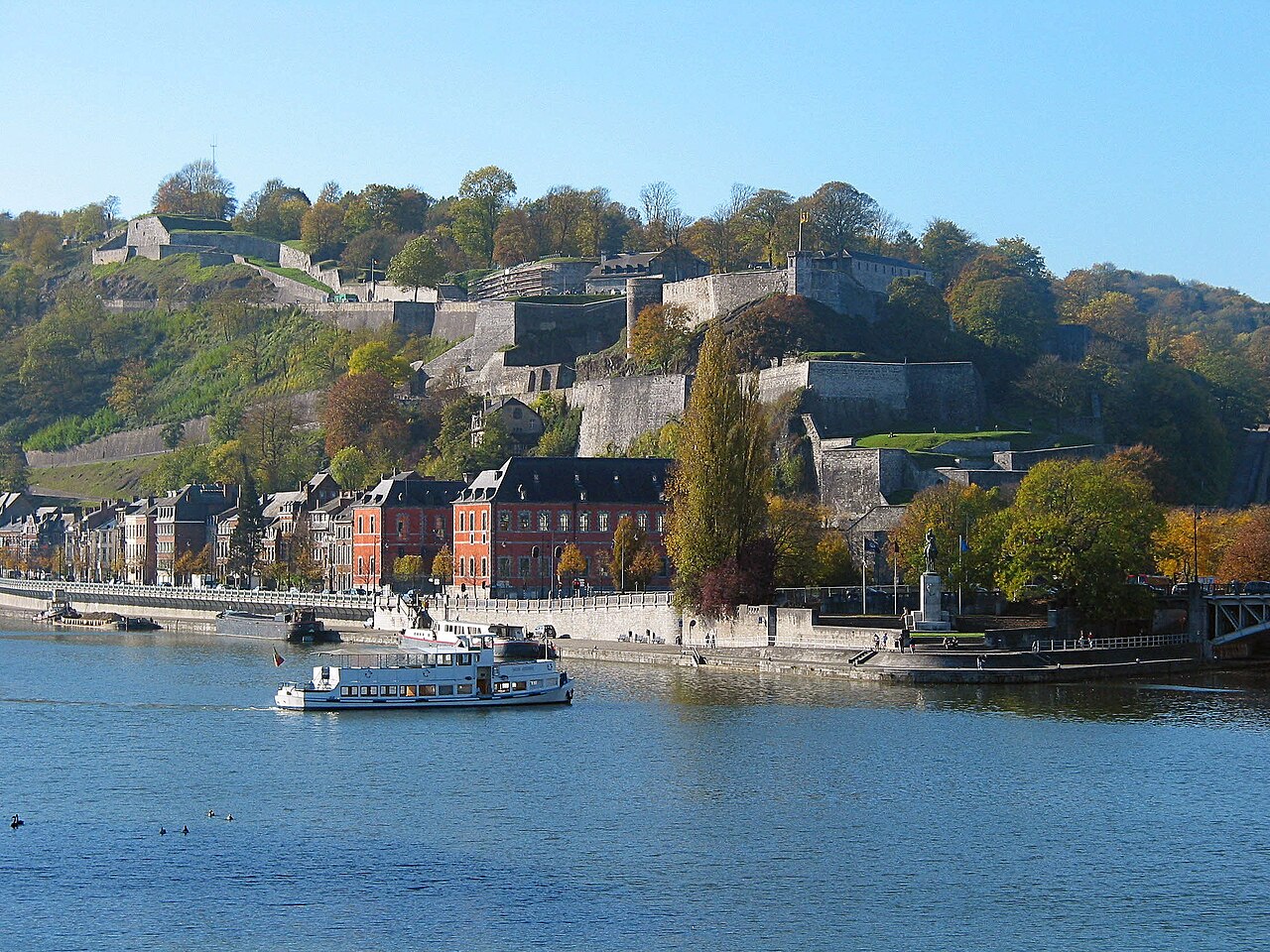
The Citadel of Namur (French: Citadelle de Namur) is a fortress in the Walloon capital city of Namur, at the confluence of the Sambre and Meuse rivers. It is originally from the Roman era, but has been rebuilt several times. Its current form was designed by Menno van Coehoorn, and improved upon by Vauban after the siege of 1692. It has been classified as a Wallonia Major Heritage site. Its highest point sits at 190 metres (620 ft). Together with those at Dinant, Huy and Liège, the Citadel of Namur forms part of the so-called Meuse Citadels.
The original citadel dates to 937. It achieved its present extent between 1631 and 1675, when the city was under Dutch control. This section was called "Terra Nova" to distinguish it from the smaller Médiane fort built adjacent in 1542 and ensuing years. A variety of subsidiary positions were built in the 18th century. It was disestablished as a military post in 1891, superseded by a new ring of forts around Namur that were calculated to prevent the city from being attacked with artillery. This ring became the Fortified Position of Namur in the 1930s. The citadel was used as protected space for its command post.
Text adapted from “Citadel of Namur” on Wikipedia, CC BY-SA 4.0.
Citadel of Namur ranks #1,198 of 9,035 worldwide in the atlas's castle fame ranking, and #10 of the 128 mapped in Belgium. Founded 937, it is older than 94% of the atlas's dated landmarks, one of 192 atlas entries founded in the 10th century. Its Wikipedia articles were opened 5,605 times in the last 60 days, more than 88% of the atlas. 13 more atlas landmarks stand within 25 km. The nearest day-trip guide is Namur, 1 km away. See how Belgium compares in the castle statistics.
View on the interactive castle map →