Ruin
Clare Castle
 England · 11th century
- Founded
- c. 1066
- Heritage status
- Grade II* listed building · scheduled monument
- Location
- Clare
- Coordinates
- 52.0772°, 0.5836°
- Open data
- Wikidata Q5126141
- Links
- Wikimedia Commons
Description
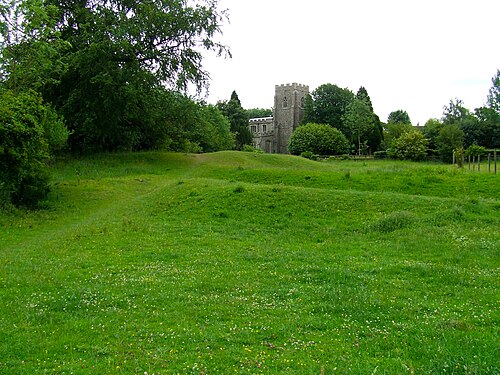
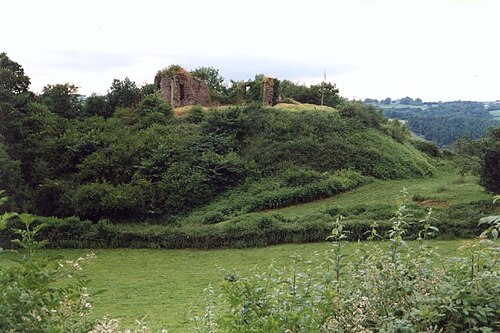
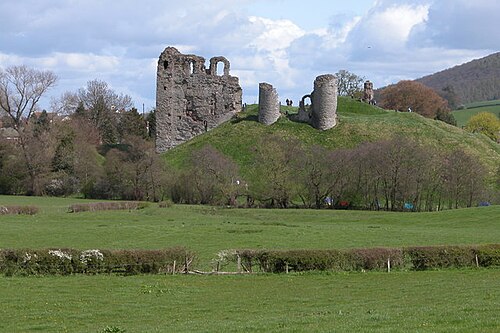
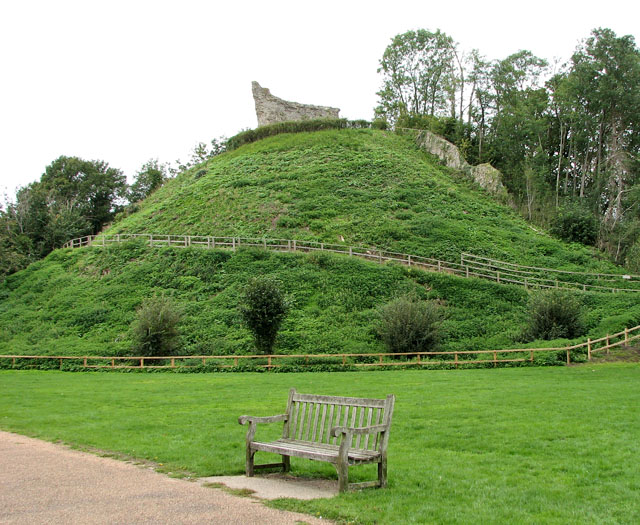
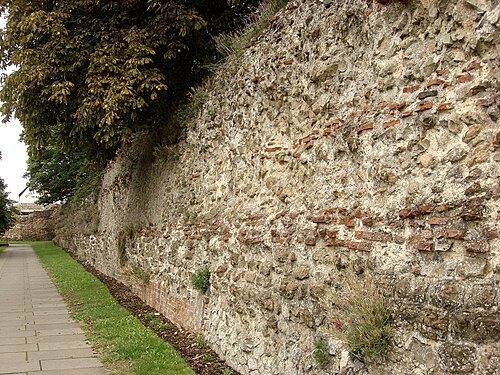
Clare Castle is a high-mounted ruinous medieval castle in the parish and former manor of Clare in Suffolk, England, anciently the caput of a feudal barony. It was built shortly after the Norman Conquest of England in 1066 by Richard Fitz Gilbert, having high motte and bailey and later improved in stone. In the 14th century it was the seat of Elizabeth de Clare, one of the wealthiest women in England, who maintained a substantial household there. The castle passed into the hands of the Crown and by 1600 was disused. The ruins are an unusually tall earthen motte surmounted by tall remnants of a wall and of the round tower, with large grassland or near-rubble gaps on several of their sides. It was damaged by an alternate line of the Great Eastern Railway in 1867, the rails of which have been removed.
The remains are a scheduled monument and a Grade II* listed building. They form the centrepiece of a public park.
Text adapted from “Clare Castle” on Wikipedia, CC BY-SA 4.0.
In the rankings
Clare Castle ranks #4,107 of 9,902 worldwide in the atlas's castle fame ranking, and #297 of the 397 mapped in England. Founded c. 1066, it is older than 88% of the atlas's dated landmarks, one of 458 atlas entries founded in the 11th century. Its Wikipedia articles were opened 969 times in the last 60 days, more than 54% of the atlas. 2 more atlas landmarks stand within 25 km. The nearest day-trip guide is Colchester, 30 km away. See how England compares in the castle statistics.
Castles nearby
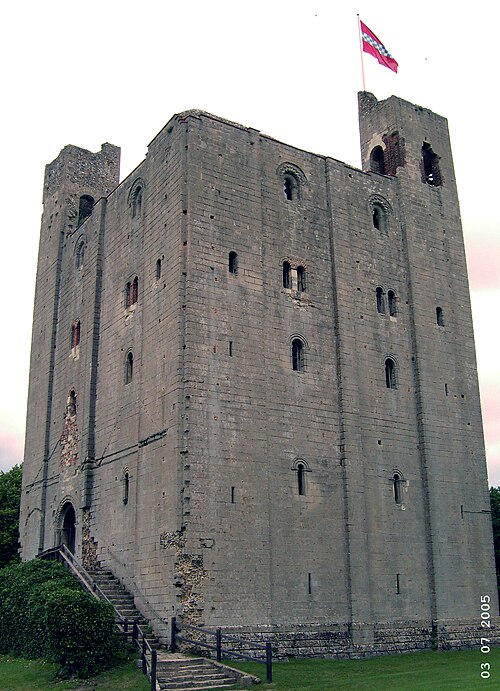
- Hedingham Castle9 km · England
- Saffron Walden Castle24 km · England
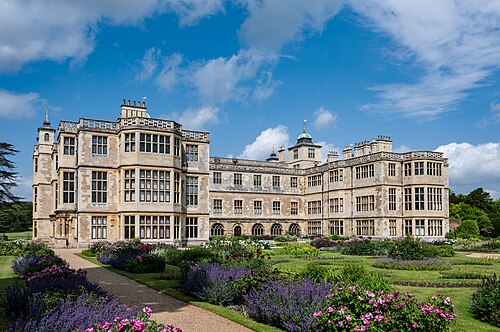
- Audley End House26 km · England
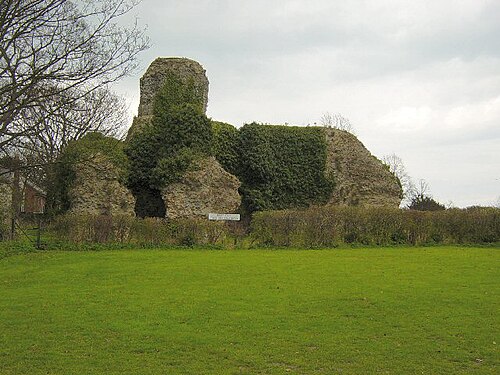
- Camulodunum30 km · England
More castles in England
- Clavering CastleEngland · 11th century
- Clifford Castle and BarbicanEngland
- Clun CastleEngland
- St Briavels CastleEngland · 13th century