 England · 11th century
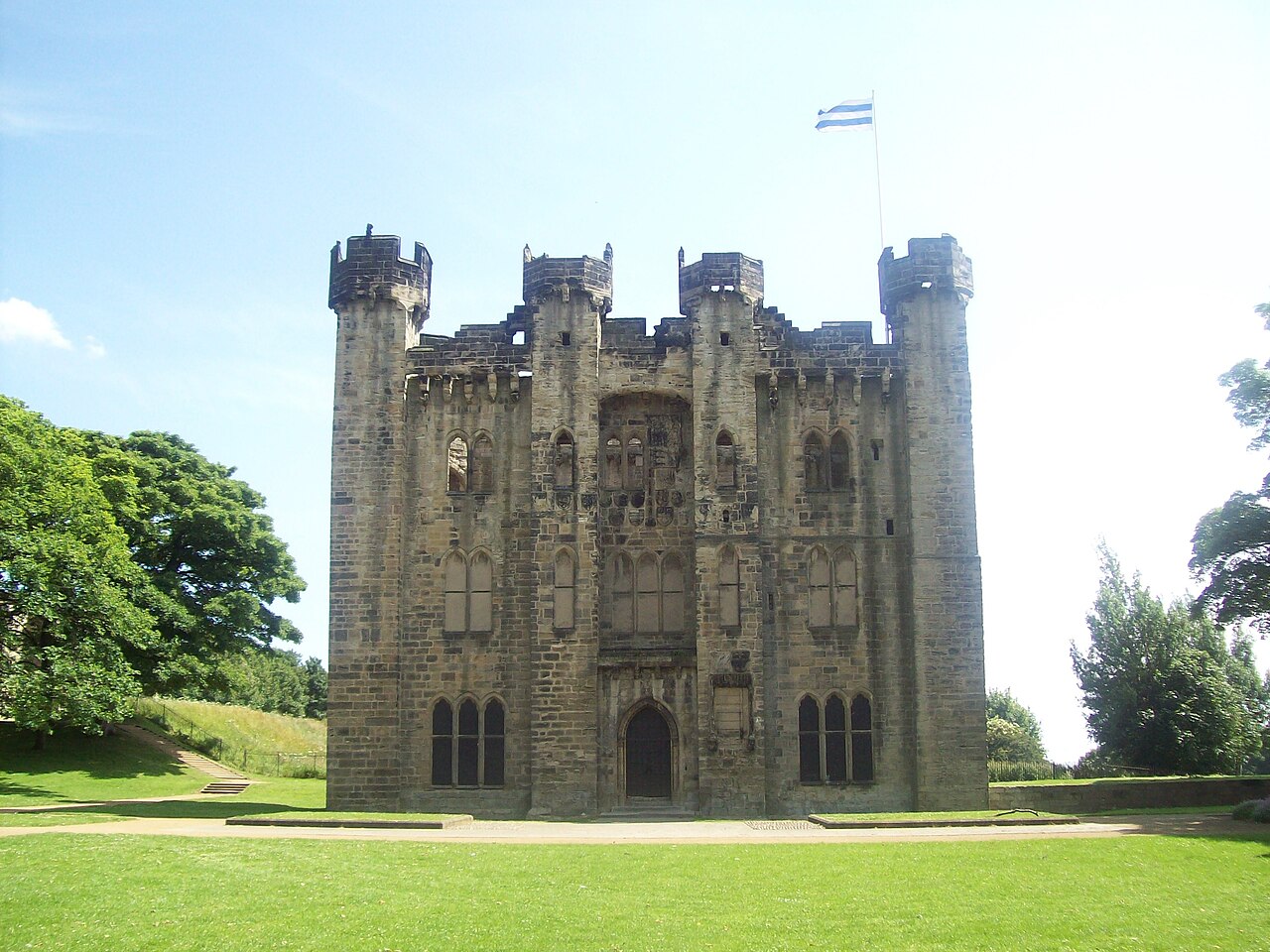
Hylton Castle ranks #3,013 of 9,040 worldwide in the atlas's castle fame ranking, and #200 of the 360 mapped in England. Founded 1066, it is older than 88% of the atlas's dated landmarks, one of 439 atlas entries founded in the 11th century. Its Wikipedia articles were opened 1,838 times in the last 60 days, more than 67% of the atlas. 9 more atlas landmarks stand within 25 km. The nearest day-trip guide is Sunderland, 4 km away. It is stop 3 of 18 on the Northumberland castle coast, Newcastle upon Tyne to Berwick-upon-Tweed. See how England compares in the castle statistics.
Hylton Castle ( HIL-tən) is a stone castle in the North Hylton area of Sunderland, England. Originally built from wood by the Hilton (later Hylton) family shortly after the Norman Conquest in 1066, it was later rebuilt in stone in the late 14th to early 15th century. The castle underwent major changes to its interior and exterior in the 18th century and it remained the principal seat of the Hylton family until the death of the last Baron in 1746. It was then Gothicised but neglected until 1812, when it was revitalised by a new owner. Standing empty again until the 1840s, it was briefly used as a school until it was purchased again in 1862. The site passed to a local coal company in the early 20th century and was taken over by the state in 1950.
One of the castle's main features is the range of heraldic devices found mainly on the west façade, which have been retained from the castle's original construction. They depict the coats of arms belonging to local gentry and peers of the late 14th to early 15th centuries and provide an approximate date of the castle's reconstruction from wood to stone.
The castle is owned by English Heritage, a charity which manages the historical environment of England. The surrounding parkland is maintained by a community organisation. The castle and its chapel are protected as a Grade I listed building and a scheduled monument. In February 2016, plans were announced to turn the castle into a community facility and visitor attraction, with the Heritage Lottery Fund awarding £2.9 million, and Sunderland Council £1.5 million, to provide classrooms, a cafe and rooms for exhibitions, meetings and events.
Text adapted from “Hylton Castle” on Wikipedia, CC BY-SA 4.0.
View on the interactive castle map →