 England · 11th century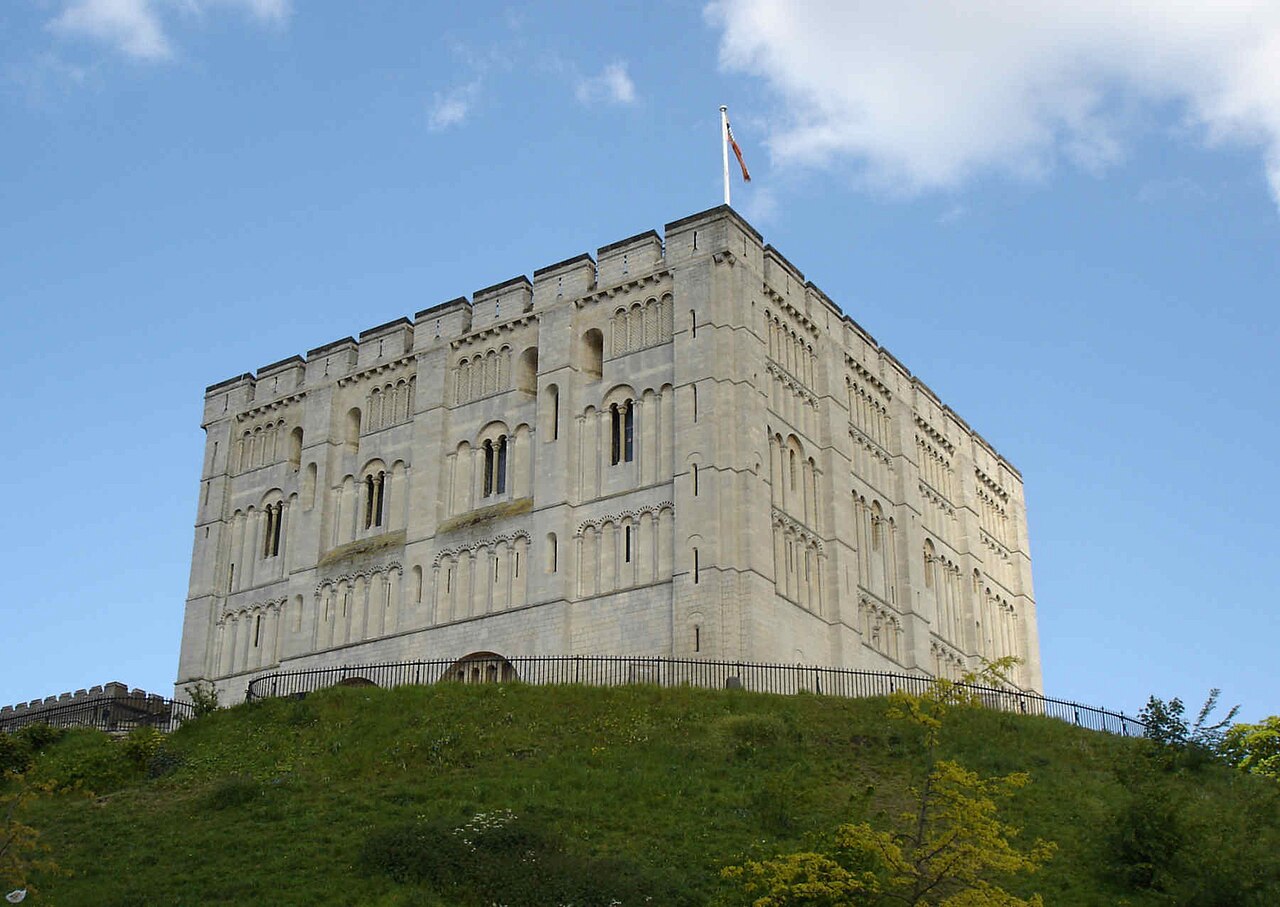
Norwich Castle is a medieval royal fortification in the city of Norwich, in the English county of Norfolk. William the Conqueror (1066–1087) ordered its construction in the aftermath of the Norman Conquest of England. The castle was used as a gaol from 1220 to 1887. In 1894, the Norwich Museum moved to Norwich Castle. The museum and art gallery holds significant objects from the region, especially works of art, archaeological finds and natural history specimens.
The historic national importance of the Norwich Castle site was recognised in 1915 with its listing as a scheduled monument. The castle buildings, including the keep, attached gothic style gatehouse and former prison wings, were given Grade I listed building status in 1954. The castle is one of the city's twelve heritage sites, and is managed by the Norfolk Museums Service.
The interior of the keep was reconstructed over five years to how it would have looked in the early 12th century, fully reopening in August 2025.
Text adapted from “Norwich Castle” on Wikipedia, CC BY-SA 4.0.
Norwich Castle ranks #821 of 9,079 worldwide in the atlas's castle fame ranking, and #61 of the 360 mapped in England. Founded 1066, it is older than 88% of the atlas's dated landmarks — one of 436 atlas entries founded in the 11th century. Its Wikipedia articles were opened 6,062 times in the last 60 days, more than 89% of the atlas. 4 more atlas landmarks stand within 25 km. The nearest day-trip guide is Colchester, 86 km away. See how England compares in the castle statistics.
View on the interactive castle map →