 France · 13th century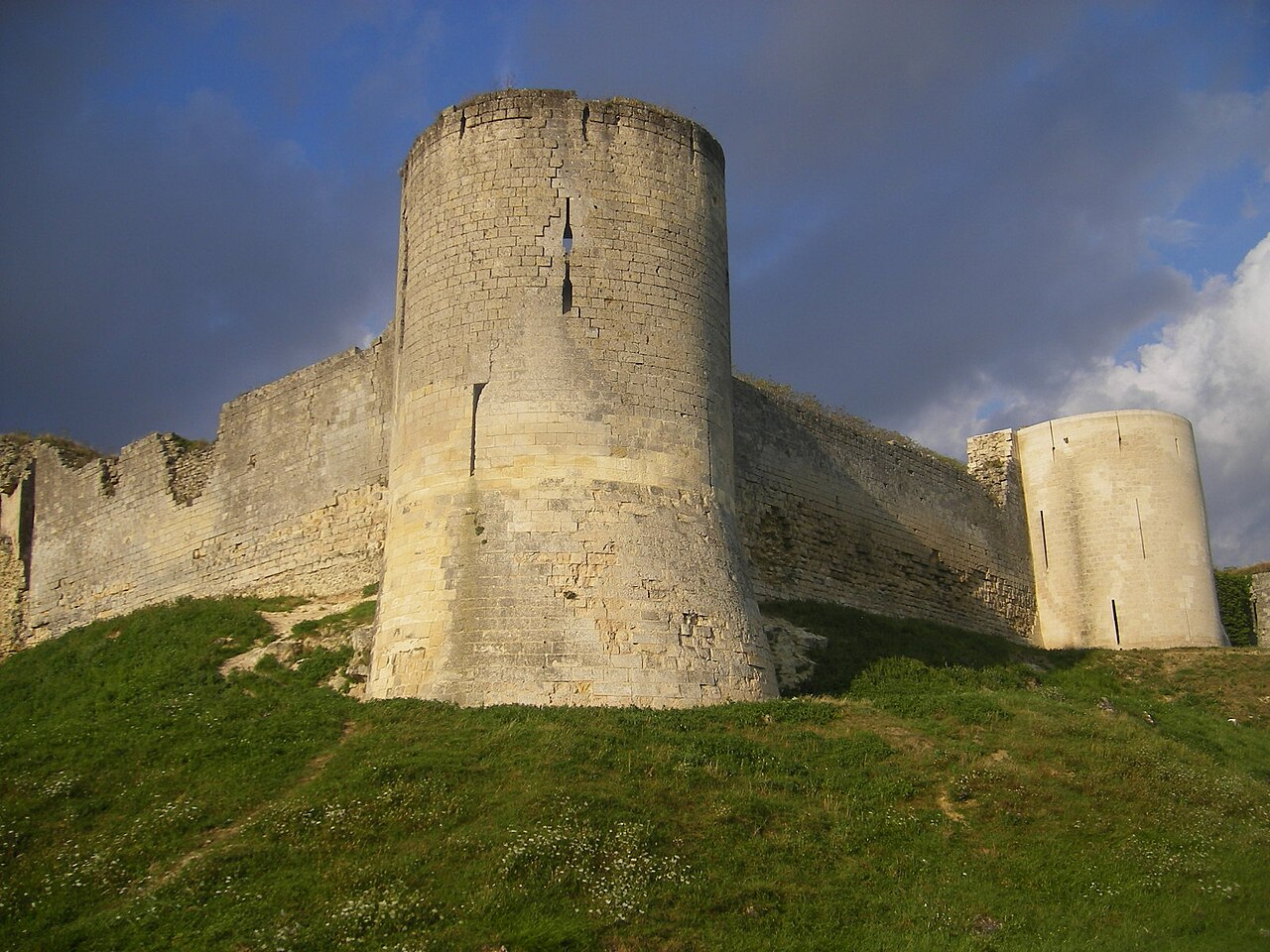
The Château de Coucy (Picard: Câtiau Couchy) is a French castle in the commune of Coucy-le-Château-Auffrique, in Picardy, built in the 13th century and renovated by Eugène Viollet-le-Duc in the 19th century.
During its heyday, until its destruction in 1917, it was famous for the sheer scale of its fortifications, above all its enormous donjon (keep)—the tallest in Europe—and for the pride of its lords, reflected in the staunchly independent rhyme: roi ne suis, ne prince ne duc ne comte aussi; Je suis le sire de Coucy ("I am not king, nor prince nor duke nor count; I am the Lord of Coucy"). By the second half of the 19th century and the early 20th century, it had also become one of the most visited monuments in France, and it was listed as a monument historique in 1862.
The château was occupied by German forces in September 1914 during the First World War. In March 1917, during the German withdrawal to the Hindenburg Line as part of Operation Alberich, the town of Coucy was devastated and the château, including its great keep (donjon) and towers, was deliberately destroyed, leaving it in ruins to this day.
Text adapted from “Château de Coucy” on Wikipedia, CC BY-SA 4.0.
Château de Coucy ranks #530 of 9,079 worldwide in the atlas's castle fame ranking, and #49 of the 793 mapped in France. Founded c. 1300, it is older than 61% of the atlas's dated landmarks — one of 1080 atlas entries founded in the 13th century. Its Wikipedia articles were opened 7,859 times in the last 60 days, more than 92% of the atlas. 1 more atlas landmarks stand within 25 km. The nearest day-trip guide is Compiègne, 38 km away. See how France compares in the castle statistics.
View on the interactive castle map →