 Wales · 13th century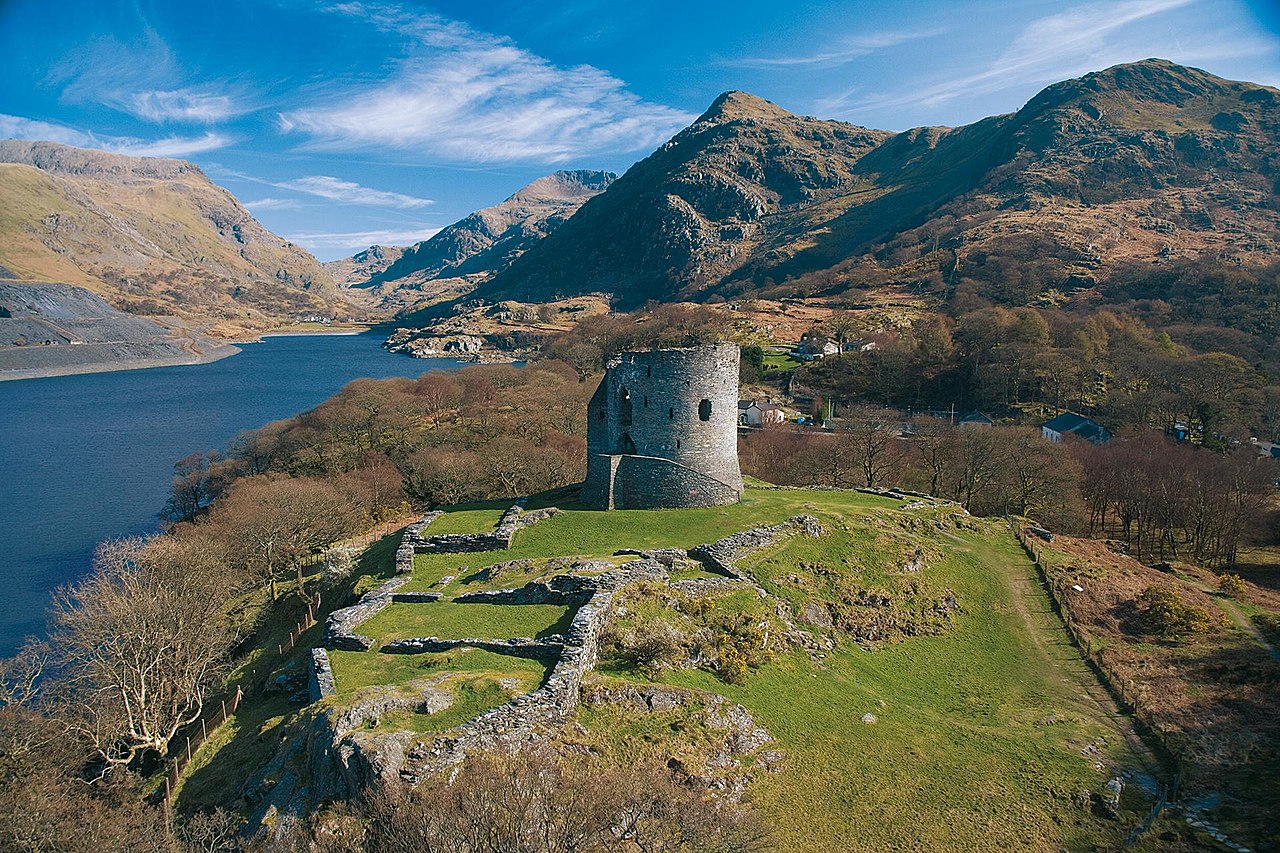
Dolbadarn Castle (English: dol-BAD-an; Welsh: Castell Dolbadarn; Welsh pronunciation: [kastɛɬ dɔl'badarn]) is a fortification built by the Welsh prince Llywelyn the Great during the early 13th century, at the base of the Llanberis Pass, in northern Wales. The castle was important both militarily and as a symbol of Llywelyn's power and authority. The castle features a large stone keep, which historian Richard Avent considers "the finest surviving example of a Welsh round tower". In 1284 Dolbadarn was taken by Edward I, who removed some of its timbers to build his new castle at Caernarfon. The castle was used as a manor house for some years, before falling into ruin.
In the 18th and 19th centuries, it was a popular destination for painters interested in Sublime and Picturesque landscapes. It is now owned by Cadw and managed as a tourist attraction, and is protected as a grade I listed building.
Text adapted from “Dolbadarn Castle” on Wikipedia, CC BY-SA 4.0.
Dolbadarn Castle ranks #1,060 of 9,079 worldwide in the atlas's castle fame ranking, and #13 of the 107 mapped in Wales. Founded 1220, it is older than 74% of the atlas's dated landmarks — one of 1080 atlas entries founded in the 13th century. Its Wikipedia articles were opened 3,416 times in the last 60 days, more than 80% of the atlas. 10 more atlas landmarks stand within 25 km. The nearest day-trip guide is Wrexham, 75 km away. It is one of the 27 landmarks on the atlas's regional map of North Wales. See how Wales compares in the castle statistics.
View on the interactive castle map →