 Lebanon · 13th century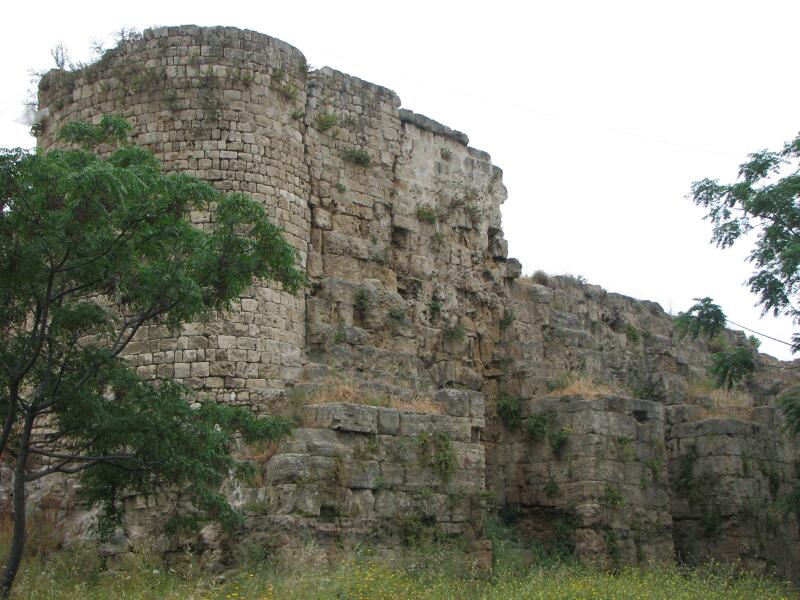
The Castle of Saint Louis (Arabic: قلعة القديس لويس), also known as Qalaat al Muizz (Arabic: قلعة المعز) or the Land Castle, is a ruined castle in Sidon, Lebanon. It was built in 1254 by French crusaders on the site of an earlier Fatimid fortress, and was altered a number of times until the 17th century.
The site now occupied by the Castle of St. Louis is said to have been the acropolis of the ancient city. Some remains of this acropolis still exist, including a theater.
The ancient citadel was probably completely demolished and then rebuilt by the Arabs.
The site became a fortress in the 10th century, when Fatimid Caliph Al-Mu'izz li-Din Allah fortified it and gave it the name Qalaat al Muizz.
The castle as it is today was built in 1254 by crusaders during the Frankish occupation of Sidon. The French king, Louis IX, better known as St. Louis, appears to have spent a long time at the castle, and this is perhaps why the site is named after him. A mass grave from the period was discovered by archaeologists in 2021.
When the Arabs reoccupied the city, the castle was restored. It was damaged later on by the Mamluks, and was extensively rebuilt by Fakhr-al-Din II in the 17th century. The castle was then looted a number of times, leaving the structure in ruins. Part of the castle collapsed during the end of the Ottoman era.
The castle served as a shelter for refugees of the 1948 Palestinian expulsion and flight. It was further damaged by Israeli shelling. Plans are being made to restore the castle.
To the south of the citadel is a mound of debris called Murex Hill. A talus of crushed shells of murex shells (correctly, specimens of Bolinus brandaris and Hexaplex trunculus) along the western slope can still be seen. This artificial mound (100 m long and 50 m high) was formed by the accumulation of refuse from the purple dye factories of Phoenician times. Mosaic tiling at the top of the mound suggests that Roman buildings were erected there when the area was no longer used as the city's dumping ground. Part of the hill today is covered by the cemetery of the Shia Muslim community of Sidon.
Text adapted from “Saint Louis Castle” on Wikipedia, CC BY-SA 4.0.
Saint Louis Castle ranks #4,935 of 9,035 worldwide in the atlas's castle fame ranking, and #9 of the 17 mapped in Lebanon. Founded 1254, it is older than 67% of the atlas's dated landmarks, one of 1090 atlas entries founded in the 13th century. 4 more atlas landmarks stand within 25 km. The nearest day-trip guide is Sidon, 1 km away. It is one of the 105 landmarks on the atlas's regional map of the Levant. See how Lebanon compares in the castle statistics.
View on the interactive castle map →