 England · 7th century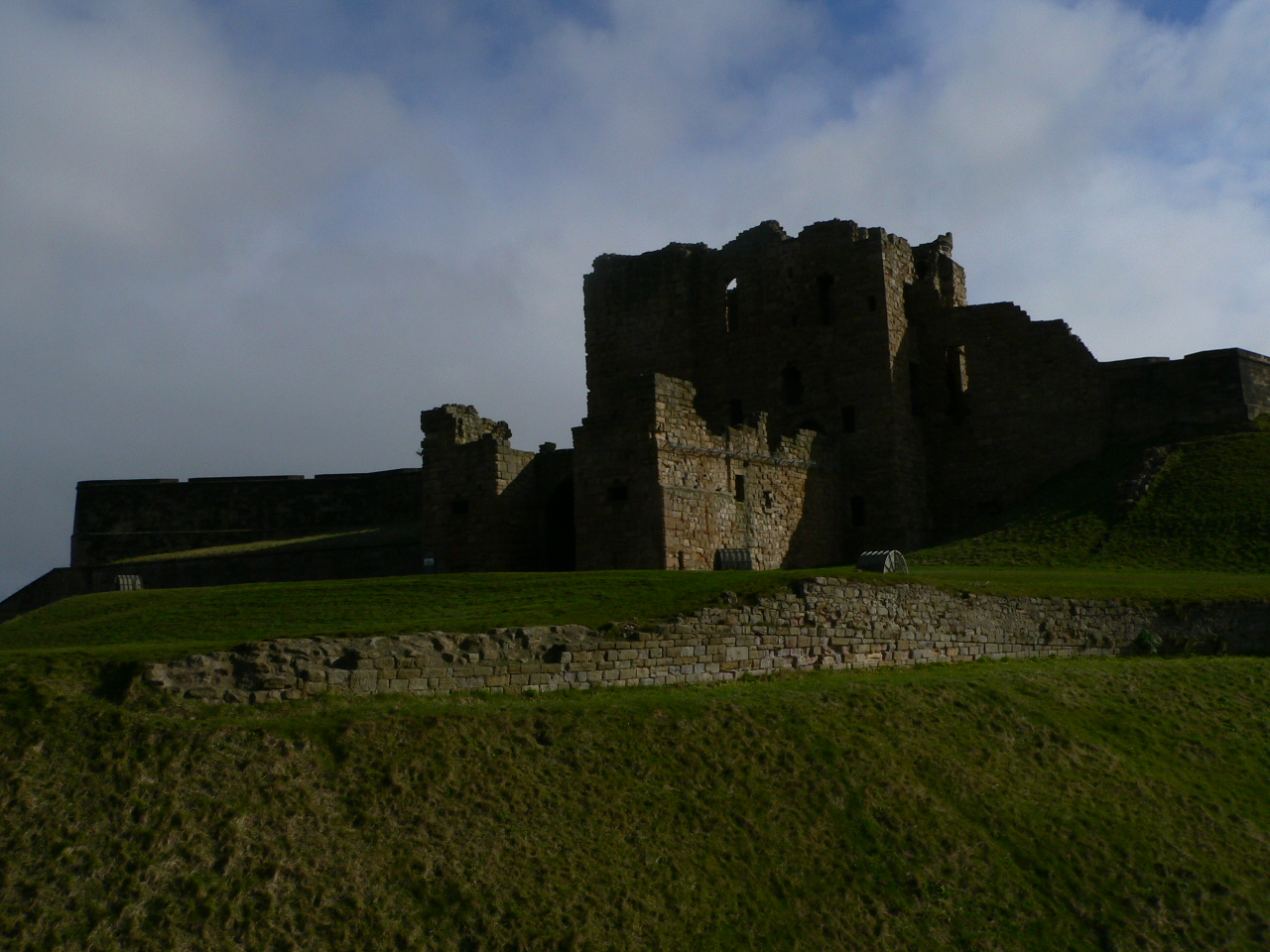
Tynemouth Priory and Castle is an historic site located on a promontory at the mouth of the Tyne at Tynemouth. The medieval Benedictine priory was protected by walls, towers, and a gatehouse. The heraldry of the metropolitan borough of North Tyneside includes three crowns commemorating the three kings who have been buried in the priory.
The earliest evidence for human habitation on the promontory are the trace remains of two circular wooden houses, the larger being typical of the Votadini tribe of the late Iron Age two centuries before the Roman invasion of AD 43 and the smaller being of the Roman period in the 2nd century.
The monastery was probably founded by one of the Anglian kings of Northumbria. Medieval traditions assert that it was founded in the mid-7th century when the Deiran king St Oswine, the first king to be buried at Tynemouth, was interred at the site by his murderer Oswiu, a Bernician king, who established the convent in penance. An abbey at the site is mentioned by Bede and, by 792, it was of enough significance to be the burial place of the Northumbrian king Osred II, the second king to be buried at Tynemouth. The monastery was a target for Viking raids throughout the 9th century until its destruction in 875. No building survives from this period of the site's history but several fragments of Anglo-Saxon crosses have been found as well as trace remains of five rectangular wooden buildings.
A towered parish church dedicated to St Mary is recorded as having stood at the site in the mid-11th century by a chaplain of Tostig, Earl of Northumbria. The church was destroyed by William the Conqueror during the Harrying of the North.
In 1065, a corpse was exhumed at the ruined monastery thought to be that of St Oswine and, in 1083, the monastery was refounded by a monk of the Benedictine Monkwearmouth-Jarrow Abbey, which was a daughter cell of Durham Priory, named Turchil. However, in 1090 Robert de Mowbray, Earl of Northumbria, granted his lands in and around Tynemouth to St Albans Abbey leading to a longstanding dispute of jurisdiction between the monks of Durham and St Albans. Shortly after the grant, construction began on the new church which was dedicated to the Virgin Mary and St Oswine, whose shrine became a place of pilgrimage.
Text adapted from “Tynemouth Priory and Castle” on Wikipedia, CC BY-SA 4.0.
Tynemouth Castle and Priory ranks #2,185 of 9,079 worldwide in the atlas's castle fame ranking, and #151 of the 360 mapped in England. Founded c. 601, it is older than 96% of the atlas's dated landmarks — one of 39 atlas entries founded in the 7th century. Its Wikipedia articles were opened 2,388 times in the last 60 days, more than 73% of the atlas. 9 more atlas landmarks stand within 25 km. The nearest day-trip guide is Sunderland, 13 km away. It is stop 5 of 18 on the Northumberland castle coast, Newcastle upon Tyne to Berwick-upon-Tweed. See how England compares in the castle statistics.
View on the interactive castle map →