 England · 13th century
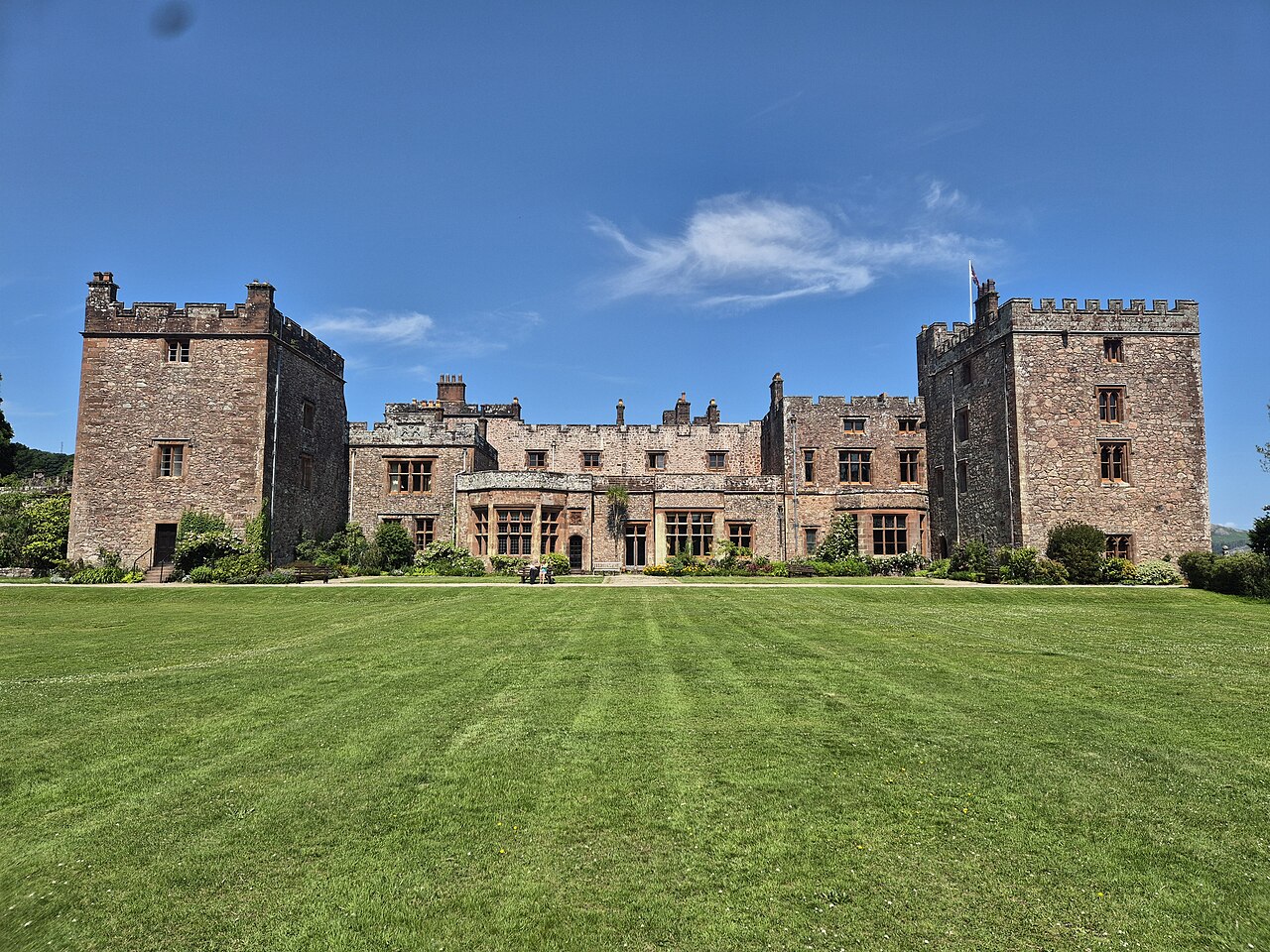
Muncaster Castle ranks #1,747 of 9,040 worldwide in the atlas's castle fame ranking, and #115 of the 360 mapped in England. Founded 1258, it is older than 66% of the atlas's dated landmarks, one of 1091 atlas entries founded in the 13th century. Its Wikipedia articles were opened 4,409 times in the last 60 days, more than 85% of the atlas. 3 more atlas landmarks stand within 25 km. See how England compares in the castle statistics.
Muncaster Castle is a privately owned castle in the parish of Muncaster, Cumbria, England. It stands overlooking the River Esk, about a mile east of the coastal village of Ravenglass. It is recorded in the National Heritage List for England as a designated Grade I listed building.
The place is now corruptly known as "Muncaster", which first appeared in a Cumberland church register in 1577, the original name according to all old evidence and records being "Mulcaster", registered in the pipe rolls of Cumberland circa 1150 (also as Molecaster and Mulecaster in 1190 and 1236 respectively).
The placename "Muncaster" contains the Latin word castra, meaning "encampment", or "fort". It is suspected that the site of the castle lies on foundations dating to the Roman era, which, if they exist, may represent a castellum for the nearby Roman fort of Glannoventa at Ravenglass.
The Muncaster estate was granted to Alan de Penitone in 1208. The oldest parts of the castle include the Great Hall and the 14th-century pele tower, a type of watch-tower fortification unique to the English-Scottish border region.
Between 1860 and 1866 Anthony Salvin extensively remodelled Muncaster Castle for the Barons Muncaster. Sir John Frecheville Ramsden, 6th Baronet discussed proposed modifications to the castle with Edwin Lutyens from 1916, but nothing came of these; Lutyens did design the Muncaster War Memorial, constructed in 1922, on a commission from Ramsden.
During the Second World War, some 700 works of art from the Tate Gallery were transferred to the castle for safekeeping. They included works by Turner, Manet and Van Gogh.
Muncaster's gardens include features designed to take advantage of views of the Esk Valley and the mountains. There is an aviary containing owls and other raptor birds from Britain and overseas. There are daily flying displays of these birds. There is an indoor maze themed on the life of a field vole.
Muncaster Castle is still owned by the Pennington family, who have lived at Muncaster for at least 800 years, and a family residence. Until her death in 2011, Phyllida Gordon-Duff-Pennington and her husband Patrick Gordon-Duff-Pennington (1930–2021) worked for three decades to restore the castle from a "crumbling relic" and establish it as a place for tourism and events.
Text adapted from “Muncaster Castle” on Wikipedia, CC BY-SA 4.0.
View on the interactive castle map →